I moved to Fairbanks this past October and I’m excited to learn more about botany in general and the flora of Alaska in particular! I work as a copywriter and copyeditor in industries that have nothing to do with botany, but I always love learning. A deeper knowledge of what I’m seeing makes it easier for me to appreciate the landscape when I’m adventuring outside. I’ve also spent lots of time exploring northeastern Minnesota, which is on the southern edge of the boreal forest and has many of the same plant species. It’s been fun to notice the differences between a particular species growing both here and in Minnesota, and I look forward to learning a new vocabulary to describe these characteristics.
Blog
-
Soil and Geomorphology Nerd Alert
Greetings fellow classmates,
I am elated to have this class available online, as UAA in Anchorage does not offer much in the way of environmental coursework. My education background is modest with a Bachelor degree from Utah State University in Environmental Studies and a minor in Soil Science. However my time invested in working in ecology is now over twenty years and I have a significant amount of experience under my belt. I started my career in the Intermountain West, working on soil remediation sites in Montana, Idaho and Utah. I spent about seven years conducting laboratory analysis of soil physical and chemical properties for the USFS Forestry Sciences Laboratories (in Logan, UT and Juneau, AK) before I crafted an exit strategy out of a lab coat and into the backcountry. I sharpened my skills in soil genesis and geomorphology while participating on soil surveys in the Wind River Mountains of Wyoming and in other remote reaches of Wyoming cowboy country. My husband is a vegetation ecologist and urged me to take a position with the NRCS in Fairbanks, AK back in 2008. We lived in the zone of discontinuous permafrost for five and a half years while I participated in a soil and vegetation mapping effort of Yukon-Charley Rivers National Preserve. I transitioned from a federal government job to working in the private sector as an Environmental Consultant in 2011. This career change not only afforded me the opportunity to transition to a home with running water that is not on fragile permafrost in Fairbanks, but it also allowed me the opportunity to participate in mapping the soils and vegetation of the entire Alaska southwest network (Aniakchak, Alagnak, Katmai, Lake Clark, and Kenai Fjords National Park). Our clients include other jobs outside of national parks and so I consider myself incredibly fortunate to have spent thousands of hours in the wilds of Alaska scratching my head and trying to make sense of the landscape (why do the landforms look like this? what processes formed this soil? or how has the vegetation changed over time?). Regrettably I have not used this time wisely to learn more about the plants around me. My experience with vegetation is fairly limited to mapping community types with satellite imagery, but even there, I have much to learn about the nuances of Veireck’s Veg Class IV. I’ve definitely committed a few plants to memory, like Menyanthes trifoliata. That is an excellent indicator species warning a trepid hiker to not attempt to cross it, for if you do, you will end doing the breast stroke and going for a swim! I have learned the latin names for the berries that I harvest. Every year I fill my freezer with different species of blueberries (primarily Vaccinium uliginosum), lingonberries (Vaccinium vitis idea), wild raspberries & salmon berries (Rubus idaeus & Rubus spectabalis which by the way is every where in Kenai Fjords and is no fun to thrash through), and the juiciest of them all – High Bush Cranberry (Vibernum edule which makes a delicious liqueur). I look forward to interacting and learning from all of you. *One note of caution though, please carry a bear deterrent when out botanising in our beautiful state, and consider traveling in a group size of 3 or more. Cheers!
-
Hello to my fellow classmates
Hi there!
My name is Pinky (not my given name, but it is the only name that I am known by in the North) and I have lived in Alaska for around 6 years. I lived out of my tent & tiny camper while I worked as a wilderness guide for the first several years in AK and during the winter I lived and worked at a rural lodge at Lake Louise (AK, not Canada). For the past few years I have lived on the north side of the Wrangell St. Elias National Park on the Nabesna Rd. where I managed a rural ranch. This past year we moved to Fairbanks where we plan to live/work for a few years as we save to build a remote cabin where we can homestead and have a home base established. While we are living in the “city” I am embracing the opportunities that city life has to offer which includes taking courses at UAF in areas of interest. I have been interested in AK flora since I arrived in the state (mainly for personal harvesting for edible and medicinal purposes, but also for knowledge in my work as a guide) and I have been learning as much as I can on my own as I spend time in the woods. I am looking forward to an opportunity to learn much more from this course!
I am taking off on a two week kayaking trip in two days so will be gone for the first half of this class but will be ready to jump in and play catch up when I return!
(No photo as my dissection kit and lens have yet to arrive)
-
Hello Classmates
Hello classmates,
I am excited to take this course and learn more about our local flora. My name is BeLinda Ebel. I am a homeschooling mother of four children. One has graduated and the remaining three are entering grades 12, 9, and 7.
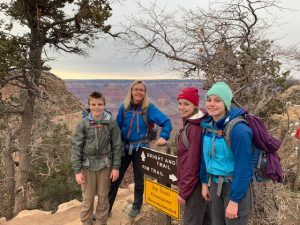
I have lived in Alaska over 30 years, 20 years in Southeast, AK and 17 years in Fairbanks. I have a Bachelors of Science in Biological Sciences and am taking this course to keep my secondary education teacher’s certification current and to teach my children some botany this summer.
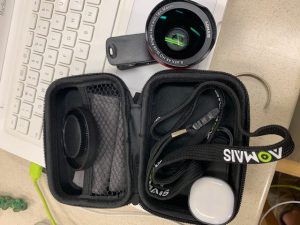
My New Tool -
Plant Dissection 4
Better late than never! It’s the end of December, so I missed my window for Alaska wild flowers, but here is a popular and beautiful ornamental flower (one of the few available here at the store year-round) – carnations.

-
Dichotomous Key
I way over-thought this process, as I initially thought we were to key-out the plants in each bin and develop a dichotomous key for each one. I’m so glad I reviewed the other posts and the instructions again, and hope that this is what we were asked to do:
-
Pressed plants
I was in Fairbanks last week and was delighted that Fireweed had already started to blossom there. Here in Anchorage it just starts to bloom in very sunny places. My travel pressing kit consisted of a field guide, paper towels, and a bag of Premium Blazer Wood Pallets.


-
Plant Dissections
Here are 3 of my 4 dissections – fireweed, wooly geranium and wild iris:

