Blog

  • Local Plant Symposium-Nome, Alaska

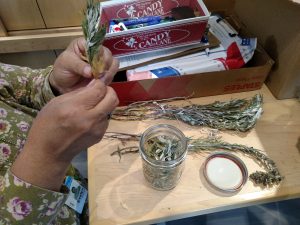
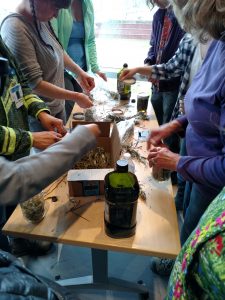
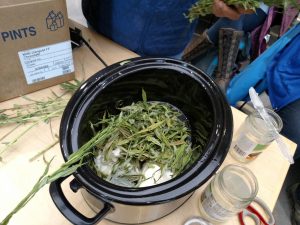
    Hello Everyone, I wanted to share some of my week in Nome, Alaska with you.   I attended the Bering Straits Region, Local Plant Symposium, hosted by Norton Sound Health Corporation on June 26 & 27th.    The Health Promotion program I work in, offers Special Project Mini grants to Tribal Health Organizations to support a local Alaska Plants as Food & Medicine symposium in their region.   Local community members, tribal healers, Elders, children, educators, Nurse Practitioners, Registered Dietitians, and students were among the many participants.   The group made healing salves, engaged in discussion to share knowledge, ate wild greens and seal oil salads, engaged in a 2 hour plant walk, and harvested local plants.
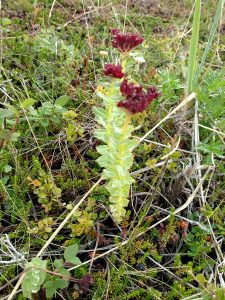
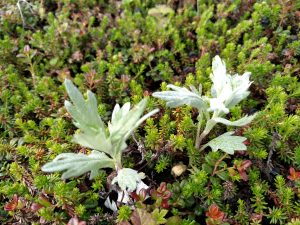
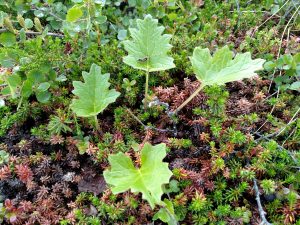
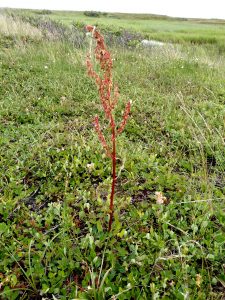
    Below are some photos from the symposium and a few plant walk pictures.


  • Dichotomous Keys-Practice with Shoes

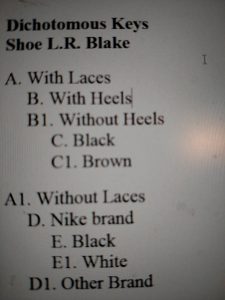
    Hello, I felt the need to practice with my shoes prior to moving onto the plants.   According to the History of Shoes-World Famous Inventors and Inventions, Lyman Reed Blake, an American inventor, invented a sewing machine to sew the modern soles of shoes.   For purposes of my practice here, we shall give him credit for developing the American modern shoe sole.   Let’s see if I have a decent understanding?   Thanks for any input.
    NOTE: the #1 after the letter signifies prime.

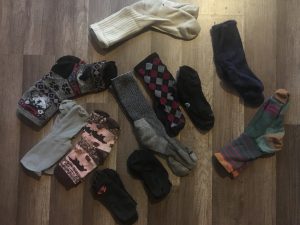
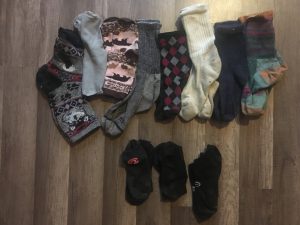
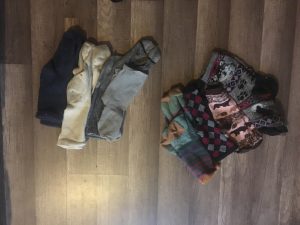
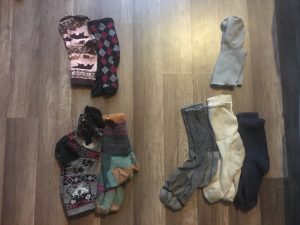
  • My Own Example: Socks

    A: Are they short socks? – Type 1

    A1: Are they long socks?

    B: Are they multicolored?

    C: Are they thin socks? – Type 2

    C1: Are they thick socks? – Type 3

    B1: Are they one color?

    D: Are they thin socks? – Type 4

    D1: Are they thick socks? – Type 5


  • Mandi’s Dichotomous Key

    A. Does the plant have flowers?

    B: Is the flower purple? – Plant 3

    B1: Is the flower white?- Plant 2

    A1: Does the plant have needles?

    C: Are they single needles? – Plant 1

    C1: Are the bundled needles? – Plant 4


  • Dichotomous Key

    1. Plant has obvious flowers
      1. White flowers, four petals——–Plant 2
      2. Purple flowers, six petals———-Plant 3
    2. Plant does not have obvious flowers
      1. Leaves form needles————Plant 1
      2. Leaves are fuzzy—————-Plant 4
  • Dichotomous Key

    Dichotomous Key Exercise

    Leaves elongated to form needles………………………………………………………………..……….PLANT 1

    Leaves not elongated to form needles:

    Flowers lacking petals…………     …………………………………………….………………PLANT 4

    Flowers with petals:

    Flowers white in color………………….…………………………………………..PLANT 2

    Flowers purple in color………………………………………………………..….PLANT 3

  • Craig Intro, better late than never…

    Hey all;   My name is Craig, and I live in Valdez, while attending PWSC and UAA mostly online working towards a Bachelors in Occupational Safety and Health.   I have been to most of Alaska since moving here twelve years ago and love being outside in it, but know little about the plants, and am looking forward to learning much more.

    Good luck to everyone, and get outside!

    CSD

  • Jamie Introduction

    Hello!   I am Jamie Freiman, and I am very much looking forward to taking this class this summer!   I moved to Fairbanks, AK from Akron, OH in January 2011.   Despite being here for several years, I am not very familiar with the local flora.   I am hoping this class will remedy that! After this class, I will be two classes away from completing my Associate’s degree.

    I am a school librarian, so I luckily have access to microscopes and dissection kits as needed.   Below, I have my current “microscope” – a macro lens for my iPhone.

    Here is my microscope:

  • Pier’s Student Intro

    Hey Ethnobotany Friends!

    My name is Pierette Imbriano, but it would be great if you could call me Pier. I have always been interested in ethnobotany but didn’t have the language to know and articulate it. I was fascinated by natural survival although can’t claim the brave title of survivalist like others in the program. I have worked on farms and obtained a license in aromatherapy where I can practice medicinally. I grew up in a small town in the suburbs, lived briefly in a rural area and for the majority of my life in cities. I’m currently a Brooklynite in New York City but have lived in various places where I learned to love at times being a naturalist, other times a pragmatist and many times just simply adapting. I hope to learn how indigenous cultures live sustainably and interact with botany and hope to be able to adapt these lessons on a larger scale that I can transfer to city planning in NYC. Hopefully accomplishing sustainable climate & culturally friendly universal trends that can be incorporated on individual and greater levels.

    On a basic level, I’m hoping to further my study of relationships between people and the earth. I want to reunite with my love of wild plants and ecosystems, while engaging on an intellectual level but mostly appreciating people and living beings w/instinct and common sense on a social, ecological, culturally sensitive/relevant level that will also provide insight into basic economic community insights. While my passion for plants is primarily around the medicinal use, I’m hoping to broaden that view again and love making pragmatic items such as baskets and clothes, toys and jewelry as I had in Minto. I’m looking to understand the socio-economic cultural and ecological connection on many levels from basic necessities to adornments/enhancements, transportation, infrastructure and more. But I’m also looking for other skills as well. I want to learn how to document these individual studies and their connection/relativity to each other in a way I can share where appropriate and approved by the culture and especially in a way where I can pick it up and jump right back into the information in 10 years as if no time has passed. I’m also super excited to learn from each person in this course- everyone is so unique. The material is amazing and I have no doubt meeting everyone in person during field study will be awe-inspiring.