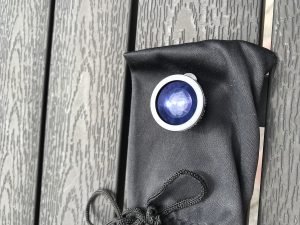
Hello, My name is Marcia Anderson. I am Alutiiq and German, born in Kodiak, Alaska and raised in the villages of Old Harbor and Port Lions. My family spent each summer and fall in South Naknek in Bristol Bay at our fish camp. I was very fortunate to have been taught, by my mother, to harvest a small handful of plants from each area. Although I grew up harvesting and consuming some local traditional plants with my family, we did not speak about them much. We learned from watching our parents and we kept very busy during our family outings to harvest berries and greens for the winter.
I currently work in a Health Promotion program and am drawn to anything that has to do with human health, especially looking at health from the perspective of the whole person. Working with traditional Alaska Native plants, is one of the ways, we promote health and healing for Alaska Native people, their families, and the community.
As we did not necessarily speak often about the plants when I was young, I now seek out educational opportunities to enhance my understanding and exposure to Alaska Flora in order to promote, teach and discuss the importance of our plants in relation to health.
I am truly excited about learning with everyone this summer. It is a steep learning curve for me, especially as I watched the videos, however, it is exactly what I desire to know and understand. My dad gifted me a Macro Lens someone gave him for his cell phone. He loves taking pictures, but does not use his phone much to do that at present. I will use this for the time being. It is such a cute piece of equipment and so simple. I, however, just had to order myself an Optivisor. After I saw the video examples of equipment, I was awestruck with being able to be hands free while dissecting and have a light too. My teenagers already think I am quite “weird” so it will confirm it in their minds even more, when I start using the Optivisor headband. Ha! I love to keep them on their toes and guessing about me! I also received my plant dissection kit this past week, and am looking forward to using it. 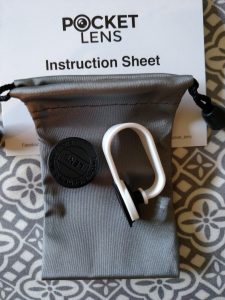
Category: Introductions
-
A Big Hello to Everyone!
-
Joining Class
Hello,
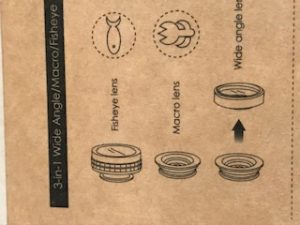
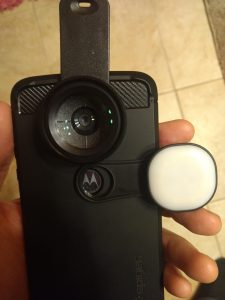
I’m interested in horticulture and I enjoy field observations and spending time on trails in Alaska forests. I’m looking forward to learning to identify the many plants surrounding this area. This is the macro lens that I have so far.
-
Hudson Bolduc
Hello Class! My name is Hudson Bolduc and I am a junior at UAF currently pursuing an interdisciplinary degree in horticulture management. I am very excited to take this course and hope to be able to take the foundational knowledge taught toward my future career in cultivation. I am currently the Garden and Greenhouse supervisor over at the princess hotel and lodge. We are growing several strains of lettuce, spicy mix, bokchoi, salanova, arugula, thyme, dill, parsley, garlic, tarragon, zucchini, basil, tomatoes, raspberries, strawberries, yellow gold potatoes, sunflowers, marigolds, peonies, and much more! All of the produce grown on the property is also taken to the kitchen and prepared for meals in the Edgewater Restaraunt. I am stoked to learn more of the proper terminology and language about how to describe and discuss plants and their root systems. Very excited to dive deeper into this course and start dissection as well!
-
Introduction from Derek
My name is Derek and I live in Manhattan, Kansas. I’m honored to be a part of the Ethnobotany program here at UAF, and I’m super excited to learn more about plant identification and the plants that live in Alaska. My favorite hobby is to forage and identify plants and fungi in various areas. I’m currently a member of a citizen science initiative to collect and identify local fungi for the herbarium in Konza Biological Station for Kansas State and I’m hoping to learn practical skills that I can directly apply in that project. I’m always looking to gain more knowledge about the natural world as to become better connected with plants, fungi, and mother Earth. It’s a pleasure to meet you all and I am looking forward to learning together in this course.
-
Introduction to Mandi
Hello! My name is Mandi and this is my third summer in Alaska. I moved up to be a tour guide and took people on camping trips all around the state. I absolutely fell in love with Alaska, and became especially interested in learning how to identify the plants and flowers I saw around me. I moved to Fairbanks in March 2018 and live in a tiny cabin in the woods – heaven. I’m enrolled in the Ethnobotany Certification program and have been taking classes since Fall 2018. I hope to complete my studies by spring 2020. I also love traveling, reading, and creating new experiences.
Here is my assembled microscope:
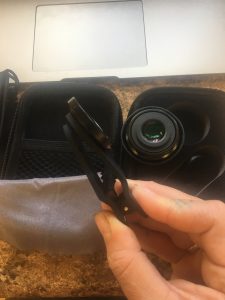
Assembling my new microscope -
Jennie’s Introduction
Hi everyone!
My name is Jennie Humphrey and I was born and raised in Haines, AK. My favorite tree is Betula papyrifera and my favorite wildflower is Achillea millefolium. I have one more semester to go at UAF and will graduate with a BA in Wildlife Biology and minor in Sustainable Agriculture. I am currently here in Haines for the summer working with the village of Klukwan on a food sovereignty project. The study will help to start some conversations about indigenous stewardship, but the main goal is to gauge people’s ideas and opinions on various food-related projects we could implement (ex: plant wild berries, fruit trees, expand community garden) and get people thinking about how they could contribute to a more food secure community.
I’m excited to take part in this class with all of you! I love learning how to use local plants as food and medicine and am happy to share what I learn along the way 🙂
-
Soil and Geomorphology Nerd Alert
Greetings fellow classmates,
I am elated to have this class available online, as UAA in Anchorage does not offer much in the way of environmental coursework. My education background is modest with a Bachelor degree from Utah State University in Environmental Studies and a minor in Soil Science. However my time invested in working in ecology is now over twenty years and I have a significant amount of experience under my belt. I started my career in the Intermountain West, working on soil remediation sites in Montana, Idaho and Utah. I spent about seven years conducting laboratory analysis of soil physical and chemical properties for the USFS Forestry Sciences Laboratories (in Logan, UT and Juneau, AK) before I crafted an exit strategy out of a lab coat and into the backcountry. I sharpened my skills in soil genesis and geomorphology while participating on soil surveys in the Wind River Mountains of Wyoming and in other remote reaches of Wyoming cowboy country. My husband is a vegetation ecologist and urged me to take a position with the NRCS in Fairbanks, AK back in 2008. We lived in the zone of discontinuous permafrost for five and a half years while I participated in a soil and vegetation mapping effort of Yukon-Charley Rivers National Preserve. I transitioned from a federal government job to working in the private sector as an Environmental Consultant in 2011. This career change not only afforded me the opportunity to transition to a home with running water that is not on fragile permafrost in Fairbanks, but it also allowed me the opportunity to participate in mapping the soils and vegetation of the entire Alaska southwest network (Aniakchak, Alagnak, Katmai, Lake Clark, and Kenai Fjords National Park). Our clients include other jobs outside of national parks and so I consider myself incredibly fortunate to have spent thousands of hours in the wilds of Alaska scratching my head and trying to make sense of the landscape (why do the landforms look like this? what processes formed this soil? or how has the vegetation changed over time?). Regrettably I have not used this time wisely to learn more about the plants around me. My experience with vegetation is fairly limited to mapping community types with satellite imagery, but even there, I have much to learn about the nuances of Veireck’s Veg Class IV. I’ve definitely committed a few plants to memory, like Menyanthes trifoliata. That is an excellent indicator species warning a trepid hiker to not attempt to cross it, for if you do, you will end doing the breast stroke and going for a swim! I have learned the latin names for the berries that I harvest. Every year I fill my freezer with different species of blueberries (primarily Vaccinium uliginosum), lingonberries (Vaccinium vitis idea), wild raspberries & salmon berries (Rubus idaeus & Rubus spectabalis which by the way is every where in Kenai Fjords and is no fun to thrash through), and the juiciest of them all – High Bush Cranberry (Vibernum edule which makes a delicious liqueur). I look forward to interacting and learning from all of you. *One note of caution though, please carry a bear deterrent when out botanising in our beautiful state, and consider traveling in a group size of 3 or more. Cheers!
-
Hello to my fellow classmates
Hi there!
My name is Pinky (not my given name, but it is the only name that I am known by in the North) and I have lived in Alaska for around 6 years. I lived out of my tent & tiny camper while I worked as a wilderness guide for the first several years in AK and during the winter I lived and worked at a rural lodge at Lake Louise (AK, not Canada). For the past few years I have lived on the north side of the Wrangell St. Elias National Park on the Nabesna Rd. where I managed a rural ranch. This past year we moved to Fairbanks where we plan to live/work for a few years as we save to build a remote cabin where we can homestead and have a home base established. While we are living in the “city” I am embracing the opportunities that city life has to offer which includes taking courses at UAF in areas of interest. I have been interested in AK flora since I arrived in the state (mainly for personal harvesting for edible and medicinal purposes, but also for knowledge in my work as a guide) and I have been learning as much as I can on my own as I spend time in the woods. I am looking forward to an opportunity to learn much more from this course!
I am taking off on a two week kayaking trip in two days so will be gone for the first half of this class but will be ready to jump in and play catch up when I return!
(No photo as my dissection kit and lens have yet to arrive)
-
Hello Classmates
Hello classmates,
I am excited to take this course and learn more about our local flora. My name is BeLinda Ebel. I am a homeschooling mother of four children. One has graduated and the remaining three are entering grades 12, 9, and 7.
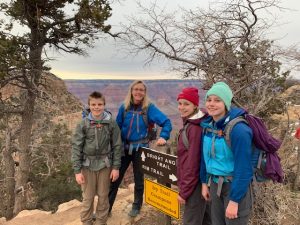
I have lived in Alaska over 30 years, 20 years in Southeast, AK and 17 years in Fairbanks. I have a Bachelors of Science in Biological Sciences and am taking this course to keep my secondary education teacher’s certification current and to teach my children some botany this summer.
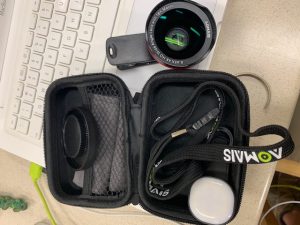
My New Tool -
Introduction- Hello from Kara
Hello-
My previous introduction didn’t show up. Lost in cyberspace somewhere. I was posting from Namibia with very limited WiFi and cell. I work as an environmental analyst and live in Eagle River. I was so excited to see this class, it’s a great way to refresh plant ID skills and learn how new technology is being adapted for the plant ID world. For work I do wetland delineations which require plant IDs, and personally I love wild sourced foods so am always trying to find new edible and medicinal herbs. Excited to work with you all! And I am in Germany until Tuesday so not sure I will have my pressed plants or observations posted until later next week.I’m using a macro lense from amazon that links to my IPhone. I think I may also order the usb microscope, that looks really handy!
Cheers!
Kara