Category: Dichotomous Keys

  • Dichotomous Key Assignment

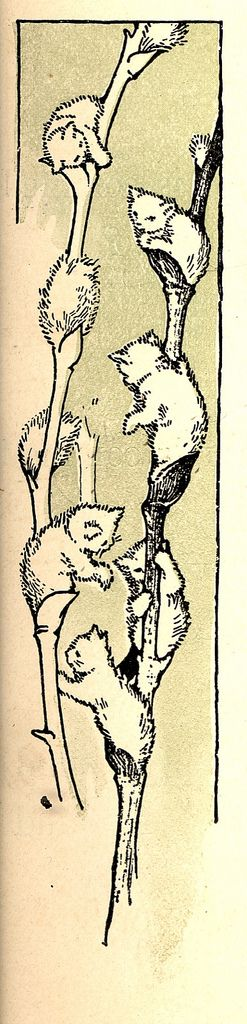
    Also just a fun note, I learned that willow flowers (plant 4) are reduced and therefore do not have sepals or petals, and are in clusters that truly don’t look much like flowers at all – called catkins! The name catkin comes from the Dutch word for kitten (katteken). Here’s a cute illustration that I found a few years ago – how fitting!
  • Dichotomous Key

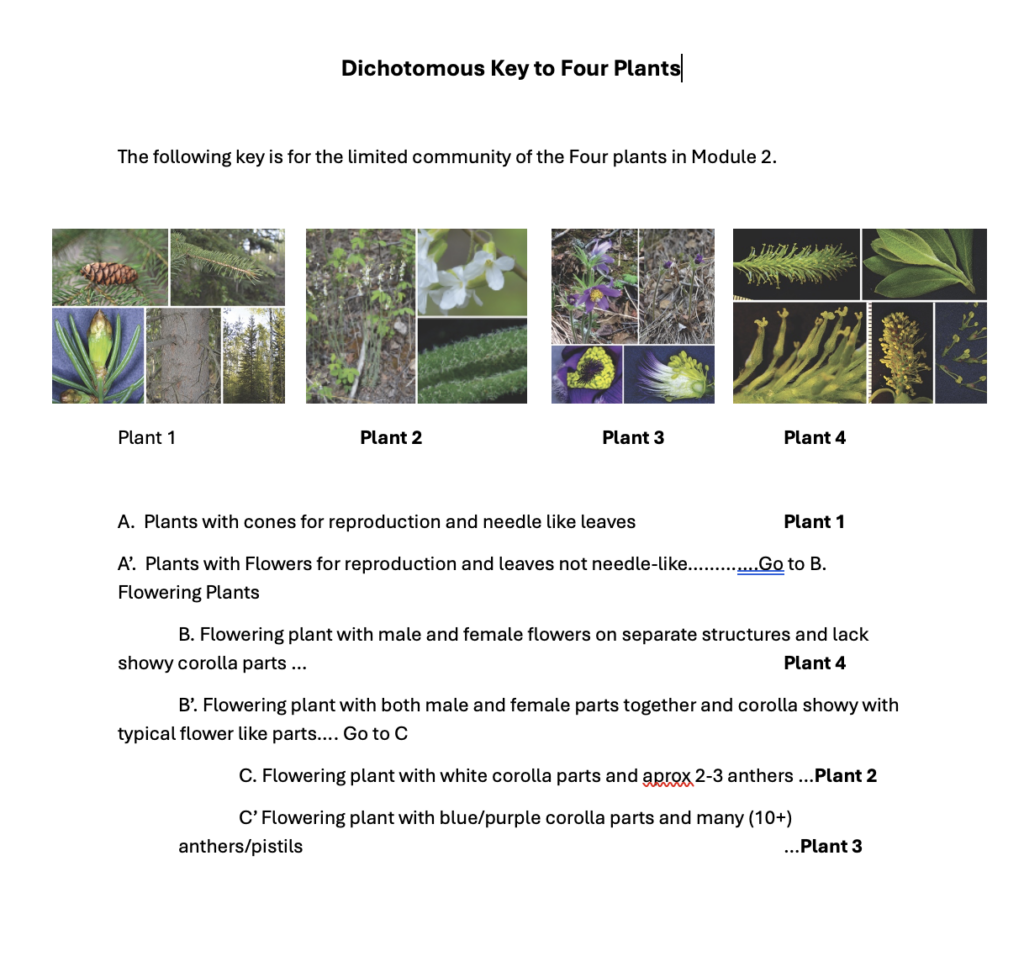
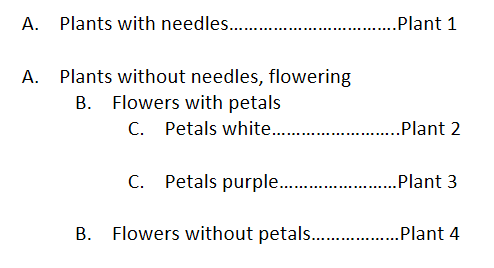
    A. Plant produces fruit – plant 1

      A1.  Plant does not produce fruit – go to B

      B. Plant has complete flower – go to C

      B1. Plant has incomplete flower – plant 4

      C. Plant has white, four-petal flower – plant 2

      C1. Plant has purple, five-petal flowers – plant 3

    1. Dichotomous Key

      Hopefully this is the right idea!

      A. If plant has no flowers go to B.

      A1. If plant has petals go to C.

      B. Plant has needles go to D.

      B1. Plant has no needles go to D.

      C. Plant has purple petals go to E.

      C1. Plant has white petals go to E.

      D If plant uses cone to reproduce (plant 1)

      D1. If plant has many anthers (plant 4)

      E.Plant has leaves on stem (plant 2)

      E1.Plant has no leaves (plant 3)

    2. Dichotomous Key

      1. Height: Taller than 1 meter (go to 2) – Less than 1 meter (go to 3)
      2. Trunk: Has a trunk with bark and needle-bearing branches – Plant 1
      3. Flowers: Presence of flowers (go to 4) – Absence of flowers; stem with fibrous hairs and whorled leaves – Plant 4
      4. Petals: 4 petals (go to 5) – 6 petals (go to 6)
      5. Leaves: Alternate pattern, voluminous at base; oblong sepals; 6 stamens – Plant 2
      6. Stamen: Multiple stamens; fanned leaves at stem top; hairlike fruit – Plant 3
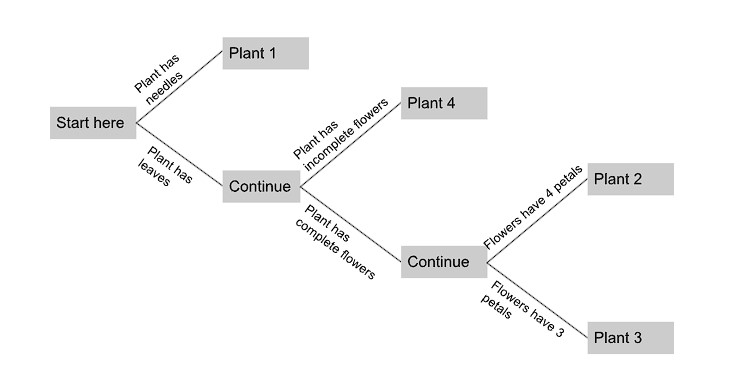
    3. Dichotomous Key – Basil

      A. Plant has needles……… Plant 1

      A1. Plant has leaves………Go to B

      B. Plant has incomplete flowers……… Plant 4

      B1. Plant has complete flowers……… Go to C

      C. Flowers have 4 petals……… Plant 2

      C1. Flowers have 3 petals……… Plant 3

      The explanation of dichotomous keys in the video reminded me of those flowchart personality quizzes they put in magazines, so I created a flowchart as well for my dichotomous key because it makes more sense to me in that format. I’m not sure if indents are unable to be added on WordPress or if I am doing it wrong, but hopefully my key is still simple to use without the proper formatting.

    4. Dichotomous Key:

      1. Does the plant have needles?
        1. Yes: Plant 1
        1. No: Go to Question 2
      2. Does the plant have white petals?
        1. Yes: Plant 2
        1. No: Go to Question 3
      3. Does the plant have hairy leaflets?
        1. Yes: Plant 3
        1. No: Go to Question 4
      4. Does the plant have only pistillates and not petals?
        1. Yes: Plant 4
    5. Dichotomous Key

      A.Plant with Needles. – Plant 1.

      A1. Plants with leaves. – B

      B. Plant with complete flowers. – C

      B1. Plant with incomplete flowers, only staminates and pistillates – Plant 4

      C.Plant with white petals – Plant 2

      C1.  Plant with purple petals – Plant 3

    6. Dichotomous Key-Delainey

      1. Plant grows as a tall, barked tree
        1. Picea spp.
      2. Plant has flowers
        1. Stems and leaves are smooth, flowers purple
          1. Pulsatilla spp.
      3. Stems and leaves are hairy/fuzzy
        1. Flowers yellow
          1. Solidago spp.
        2. Flowers white
          1. Arabis spp.
    7. Response to Dichotomous Key

      I enjoyed Rachel’s Dichotomous Key. I found it easy to understand as she placed the option above, then statement in the middle then next option below, so it was easy to read the transition. The transition between each feature of the plant was easy to apply, visualize and understand the differences.